

1. Tổng quan về năng lượng trong cơ thể vật nuôi
Năng lượng là yếu tố cốt lõi quyết định tăng trưởng, sinh sản và khả năng chống chịu bệnh tật của vật nuôi. Trong cơ thể, năng lượng không tồn tại dưới dạng tự do mà được chuyển hóa liên tục giữa các dạng khác nhau, trong đó glucose và ATP (Adenosine Triphosphate) đóng vai trò trung tâm.
Tuy nhiên, nhiều người chăn nuôi vẫn nhầm lẫn giữa việc “cung cấp năng lượng” qua glucose và vai trò thực sự của ATP trong tế bào.
2. Glucose – Nguồn nguyên liệu năng lượng đầu vào
2.1 Glucose là gì?
Glucose là một loại đường đơn, được hấp thu từ thức ăn (tinh bột, carbohydrate) và là nguồn nguyên liệu chính để cơ thể sản xuất năng lượng.
2.2 Vai trò của glucose trong vật nuôi
- Cung cấp nguyên liệu cho quá trình đường phân (glycolysis)
- Duy trì đường huyết ổn định
- Là nguồn năng lượng nhanh cho não và cơ
- Tham gia tổng hợp glycogen dự trữ
2.3 Hạn chế của việc chỉ bổ sung glucose
- Không trực tiếp cung cấp năng lượng sử dụng ngay
- Phụ thuộc vào hệ enzyme và chức năng gan
- Hiệu quả giảm khi vật nuôi bị stress, bệnh, rối loạn chuyển hóa
3. ATP – “Đồng tiền năng lượng” của tế bào
3.1 ATP là gì?
ATP là dạng năng lượng trực tiếp mà tế bào sử dụng để thực hiện mọi hoạt động sống.
3.2 Vai trò của ATP
- Cung cấp năng lượng cho co cơ, vận động
- Hỗ trợ tổng hợp protein, enzyme
- Tăng cường miễn dịch
- Duy trì cân bằng ion và hoạt động tế bào
3.3 Đặc điểm nổi bật
- ATP không cần chuyển hóa thêm để sử dụng
- Tác động nhanh, đặc biệt trong giai đoạn stress
- Là yếu tố quyết định hiệu suất sinh học
4. Sự khác biệt giữa cung cấp năng lượng qua glucose và ATP
|
Tiêu chí |
Glucose |
ATP |
|---|---|---|
|
Bản chất |
Nguyên liệu đầu vào |
Năng lượng sử dụng trực tiếp |
|
Cơ chế |
Cần chuyển hóa thành ATP |
Dùng ngay trong tế bào |
|
Tốc độ tác động |
Chậm hơn |
Nhanh |
|
Phụ thuộc cơ thể |
Cao (gan, enzyme) |
Thấp hơn |
|
Hiệu quả khi stress |
Giảm |
Duy trì tốt |
👉 Kết luận: Glucose giống như “nguyên liệu”, còn ATP là “năng lượng đã sẵn sàng sử dụng”.
5. Khi nào cần bổ sung ATP thay vì chỉ glucose?
Trong thực tế chăn nuôi, có nhiều giai đoạn mà việc chỉ cung cấp glucose là chưa đủ:
5.1 Giai đoạn stress
- Cai sữa
- Vận chuyển
- Thay đổi thời tiết
👉 ATP giúp tế bào hoạt động ngay cả khi chuyển hóa bị suy giảm
5.2 Giai đoạn bệnh lý
- Nhiễm khuẩn, viêm
- Suy giảm miễn dịch
👉 ATP hỗ trợ phục hồi nhanh hơn
5.3 Giai đoạn tăng trưởng mạnh
- Heo con, gà con
- Giai đoạn vỗ béo
👉 Nhu cầu năng lượng cao → cần ATP để tối ưu hiệu suất
6. Ứng dụng thực tiễn trong dinh dưỡng thú y
6.1 Kết hợp glucose và chất hỗ trợ tạo ATP
- Vitamin nhóm B
- Khoáng vi lượng
- Coenzyme
6.2 Bổ sung trực tiếp tiền chất ATP
- Nucleotide
- Các hợp chất tăng chuyển hóa năng lượng
6.3 Tối ưu khẩu phần
- Cân bằng năng lượng – protein
- Giảm stress oxy hóa
- Hỗ trợ hệ tiêu hóa
7. Kết luận
Hiểu đúng sự khác biệt giữa glucose và ATP giúp nhà chăn nuôi xây dựng chiến lược dinh dưỡng hiệu quả hơn.
- Glucose: nguồn cung cấp nguyên liệu
- ATP: năng lượng sử dụng trực tiếp
👉 Việc kết hợp cả hai một cách hợp lý sẽ giúp:
- Tăng hiệu suất tăng trưởng
- Giảm hao hụt
- Nâng cao sức đề kháng
VAI TRÒ CỦA CHROMIUM VÀ GUANIDINOACETIC ACID (GAA) TRONG CUNG CẤP NĂNG LƯỢNG VÀ TỐI ƯU NĂNG SUẤT VẬT NUÔI
1. Tổng quan
Trong dinh dưỡng vật nuôi hiện đại, tối ưu hóa hiệu quả sử dụng năng lượng không chỉ phụ thuộc vào khẩu phần mà còn liên quan đến các hoạt chất sinh học hỗ trợ chuyển hóa. Hai thành phần nổi bật hiện nay là:
- Chromium (Cr) – vi khoáng điều hòa chuyển hóa glucose
- Guanidinoacetic acid (GAA) – tiền chất tổng hợp creatine, cung cấp năng lượng nhanh
Sự kết hợp giữa hai hoạt chất này mang lại hiệu quả hiệp đồng rõ rệt trong việc cải thiện năng suất.
2. Chromium – Tối ưu sử dụng glucose và insulin
2.1 Cơ chế tác động
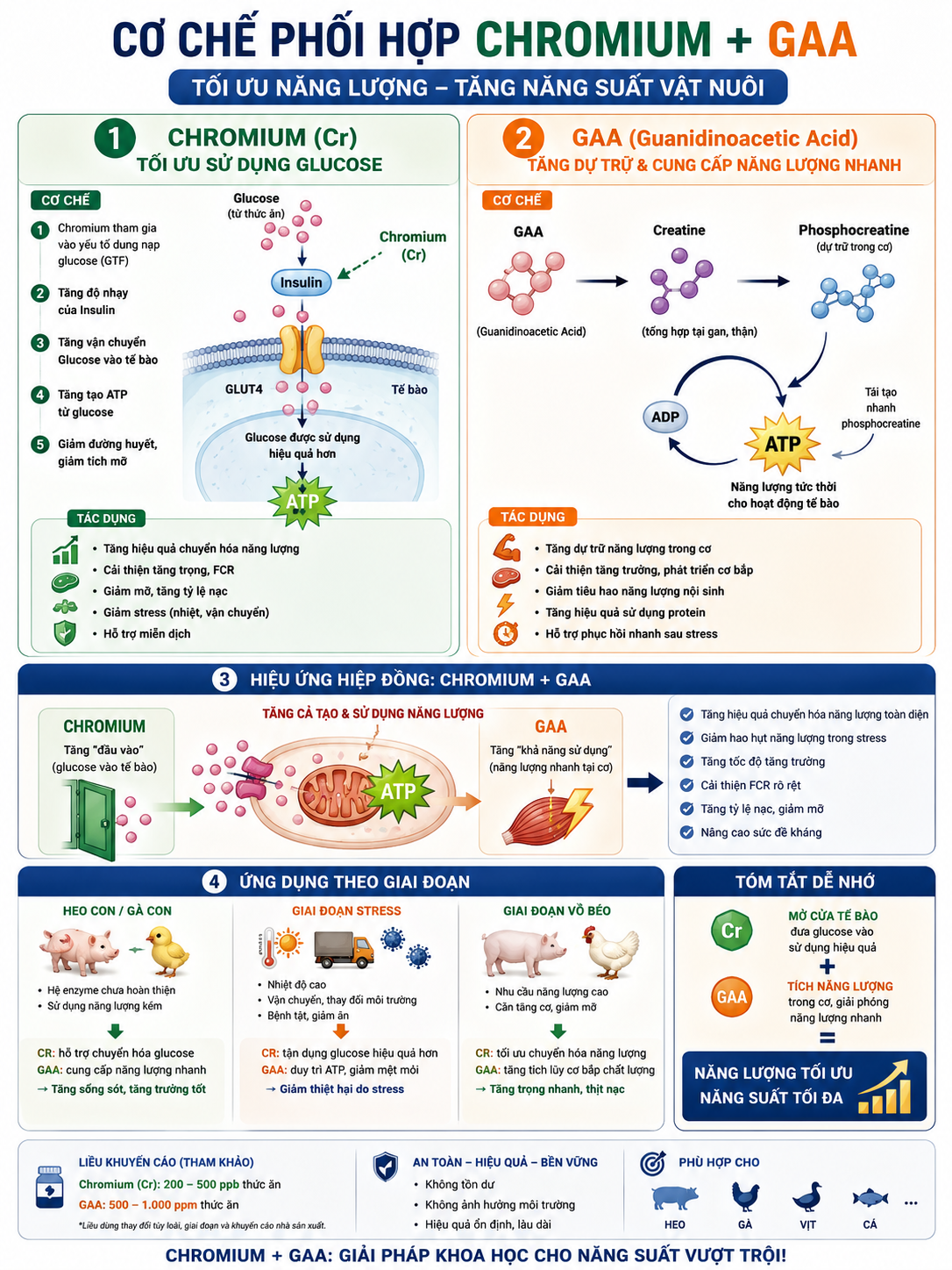
Chromium tham gia vào yếu tố dung nạp glucose (GTF – Glucose Tolerance Factor), giúp:
- Tăng độ nhạy của insulin
- Tăng vận chuyển glucose vào tế bào
- Giảm đường huyết dư thừa trong máu
👉 Kết quả: Glucose được sử dụng hiệu quả hơn để tạo năng lượng (ATP)
2.2 Tác dụng sinh học
- Tăng hiệu quả chuyển hóa năng lượng
- Giảm tích mỡ, tăng tỷ lệ nạc
- Cải thiện tăng trọng và FCR (hệ số chuyển đổi thức ăn)
- Giảm stress (đặc biệt stress nhiệt)
- Hỗ trợ miễn dịch
2.3 Ý nghĩa trong chăn nuôi
Trong điều kiện stress (nhiệt, vận chuyển, bệnh), khả năng sử dụng glucose giảm → Chromium giúp “mở cửa” tế bào để đưa glucose vào sử dụng hiệu quả hơn.
3. Guanidinoacetic Acid (GAA) – Tăng dự trữ và cung cấp năng lượng nhanh
3.1 Cơ chế tác động
GAA là tiền chất trực tiếp để tổng hợp creatine, sau đó chuyển thành phosphocreatine – dạng dự trữ năng lượng nhanh trong cơ.
Chu trình:
GAA → Creatine → Phosphocreatine → ATP
👉 Đây là hệ thống cung cấp năng lượng tức thời cho tế bào, đặc biệt là cơ.
3.2 Tác dụng sinh học
- Tăng dự trữ năng lượng trong cơ
- Cải thiện tăng trưởng và phát triển cơ bắp
- Giảm tiêu hao năng lượng nội sinh
- Tăng hiệu quả sử dụng protein
- Hỗ trợ phục hồi nhanh sau stress
3.3 Lợi ích thực tế
- Tăng khối lượng cơ (heo thịt, gà thịt)
- Cải thiện chất lượng thịt
- Tăng sức bền và khả năng vận động
4. Tác dụng phối hợp Chromium + GAA: Hiệu ứng hiệp đồng mạnh mẽ
4.1 Cơ chế phối hợp
Chromium |
GAA |
|---|---|
Đưa glucose vào tế bào |
Tạo hệ thống dự trữ và giải phóng năng lượng |
Tăng tạo ATP từ glucose |
Tăng tái tạo ATP nhanh |
Điều hòa insulin |
Cung cấp năng lượng tức thời |
👉 Kết hợp = Tăng cả “đầu vào” và “khả năng sử dụng năng lượng”
4.2 Lợi ích hiệp đồng
Khi sử dụng đồng thời Chromium và GAA:
- Tăng hiệu quả chuyển hóa năng lượng toàn diện
- Giảm hao hụt năng lượng trong stress
- Tăng tốc độ tăng trưởng
- Cải thiện FCR rõ rệt
- Tăng tỷ lệ nạc, giảm mỡ
- Nâng cao sức đề kháng
4.3 Ứng dụng theo giai đoạn
Giai đoạn heo con / gà con
- Hệ enzyme chưa hoàn thiện
- 👉 Cần Chromium để hỗ trợ chuyển hóa
- 👉 Cần GAA để cung cấp năng lượng nhanh
Giai đoạn stress (nhiệt, vận chuyển)
- Giảm ăn, giảm hấp thu
- 👉 Chromium giúp tận dụng glucose tốt hơn
- 👉 GAA duy trì năng lượng tế bào
Giai đoạn vỗ béo
- Nhu cầu năng lượng cao
- 👉 Tối ưu tăng trọng và tỷ lệ nạc
5. Kết luận
Chromium và GAA không chỉ là phụ gia dinh dưỡng mà là giải pháp chiến lược trong tối ưu năng lượng:
- Chromium: tăng hiệu quả sử dụng glucose
- GAA: tăng dự trữ và cung cấp năng lượng nhanh
- Kết hợp: tối ưu hóa toàn bộ quá trình tạo và sử dụng ATP
👉 Ứng dụng đúng giúp:
- Tăng năng suất
- Giảm chi phí thức ăn
- Nâng cao hiệu quả chăn nuôi bền vững